
We do not request reimbursement of costs
(such as repayment for obtaining medical records)
from veterans nor from people who suffer from multiple sclerosis.
- Call today for a free evaluation
- 1-888-774-7243
Can You Get Disability Benefits for Chiari Malformation?
If you’ve been living with Chiari malformation and wondering whether Social Security recognizes it as a covered disability to qualify you for benefits, you’re not alone. This is one of the more misunderstood conditions in the disability system, largely because two people with the same diagnosis can have completely different day-to-day experiences.
One person might manage their symptoms with medication and occasional rest breaks, while another may struggle to get through a single workday without debilitating pain. Social Security’s job is to look past the label and evaluate what your specific case actually looks like on paper.
Chiari malformation is not listed as its own condition in the Social Security Administration’s Blue Book, but many people who live with it still qualify for SSDI or SSI.
Approval typically depends on how severely your symptoms, including headaches, dizziness, muscle weakness, or cognitive fog, limit your ability to work. With the right medical documentation, many claims are evaluated under the SSA’s neurological disorders rules or through a residual functional capacity assessment.
Getting familiar with the SSDI application process early on can help you gather the right records from the start, maximizing your chances of a timely approval.
What Is Chiari Malformation?
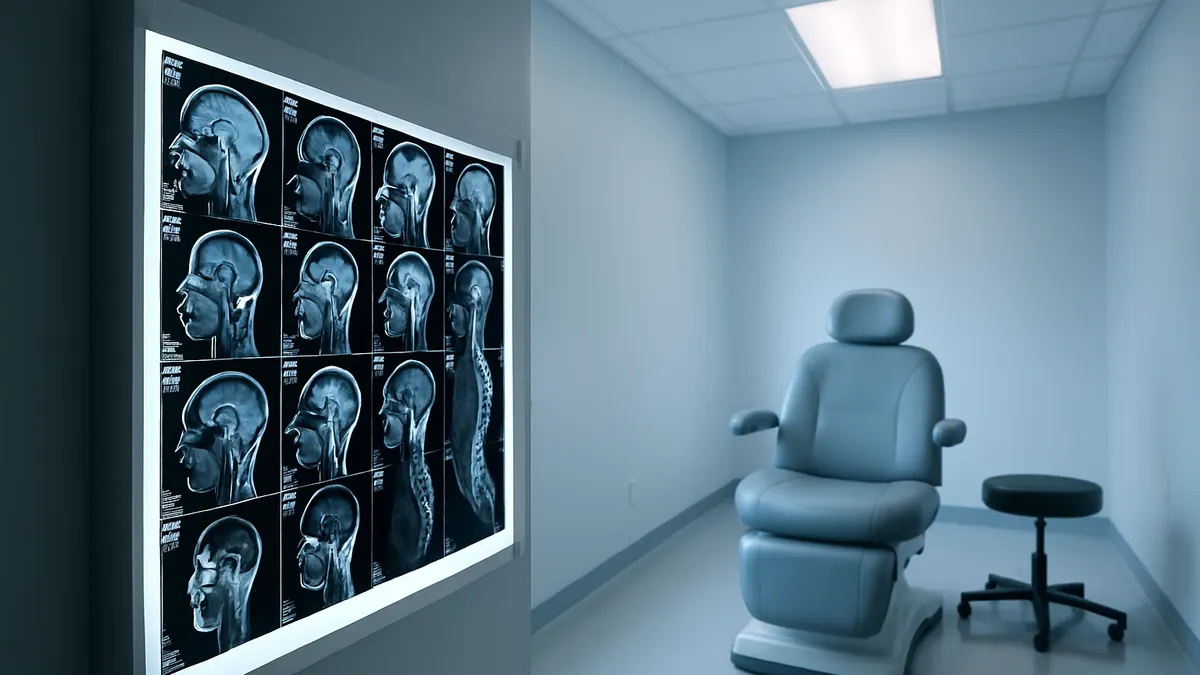
Chiari malformation happens when part of the cerebellum — the area of the brain that controls balance and coordination — extends downward into the spinal canal.
This crowds the space where cerebrospinal fluid normally flows, which can put pressure on the brainstem and spinal cord. For some people, the condition is discovered by accident and causes almost no trouble. For others, it produces daily symptoms severe enough to end a career.
Some cases are congenital, meaning the skull simply didn’t develop enough space for the cerebellum. Others develop later in life due to changes in cerebrospinal fluid pressure, prior spinal surgery, or trauma.
Because symptom onset can happen at almost any age, Chiari malformation often shows up in Social Security claims filed by young adults, middle-aged workers, and people well into their fifties and sixties.
Doctors classify the condition into four main types:
| Type | Key Characteristics |
| Type I | Most common; often diagnosed in adolescence or adulthood; symptoms range from none to severe |
| Type II | Present at birth; frequently linked to spina bifida; typically more severe |
| Type III | Rare and life-threatening; part of the cerebellum protrudes through the skull |
| Type IV | Extremely rare; involves underdevelopment of the cerebellum |
Common Symptoms That Affect Daily Life and Work
The symptoms of Chiari malformation vary widely from person to person, but symptoms that tend to interfere with full-time work include:
- Severe headaches that qualify for disability when they occur at the base of the skull and worsen with coughing, sneezing, or straining
- Neck pain and stiffness
- Dizziness, balance problems, or vertigo severe enough to disrupt standing and walking
- Numbness or tingling in the hands and arms
- Muscle weakness or poor hand coordination
- Difficulty swallowing or speaking
- Blurred or double vision
- Trouble concentrating, sometimes described as “brain fog”
- Chronic fatigue
When these symptoms occur together, everyday tasks like driving, standing for long periods, or focusing through a workday can become genuinely difficult.
The cognitive symptoms in particular often overlap with what SSA sees in traumatic brain injury disability claims, since both involve documented deficits in concentration, memory, and processing speed.
Many claimants also notice that symptoms flare with specific triggers, such as bending over, lifting, straining during a bowel movement, or even laughing hard. These activity-triggered episodes can make jobs that involve physical exertion or repetitive movement especially difficult, and tracking when and why flare-ups happen can become valuable evidence later in the claims process.
Does Social Security Recognize Chiari Malformation as a Disability?
Social Security’s Blue Book does not contain a listing written specifically for Chiari malformation. However, that does not mean the SSA won’t provide benefits for people with this condition. Claims are typically evaluated under the SSA’s neurological disorders listing, which covers conditions that cause significant physical or cognitive limitations from damage to the nervous system.
Many claimants with Chiari malformation also develop syringomyelia, a related condition where fluid-filled cysts form in the spinal cord.
When that happens, the combined effects, including pain, weakness, and loss of sensation, often strengthen your medical case. Even without a syrinx, the SSA will still consider how your headaches, balance problems, and cognitive symptoms combine to limit your ability to sustain full-time work.
It’s also worth noting that Social Security evaluates the combined impact of every medically determinable impairment you have, not just Chiari malformation on its own. If you also live with anxiety, depression, chronic migraines, or another condition brought on or worsened by Chiari-related pain, those effects typically should be factored into your overall claim rather than reviewed in isolation.
How Social Security Evaluates a Chiari Malformation Claim
Because there’s no dedicated listing, most Chiari malformation cases are decided based on function rather than diagnosis alone. The SSA generally works through this process:
- Confirms you’re not working at a substantial gainful level.
- Reviews whether your condition is “severe” under SSA rules, meaning it significantly limits basic work activities.
- Checks whether your symptoms meet or medically equal a listed impairment, such as the neurological or mental disorder listings, when cognitive effects are significant.
- Assesses your residual functional capacity (RFC) or creates a detailed picture of what you can still do physically and mentally despite your symptoms.
- Determines whether your RFC allows you to return to past work or adjust to other work that exists in meaningful numbers.
Because step four typically carries so much weight, a strong, well-documented RFC is often the deciding factor in whether a Chiari malformation claim succeeds.
If your RFC doesn’t allow for your past work, Social Security also weighs vocational factors like your age, education, and transferable skills before deciding whether other jobs exist that you could realistically perform.
Medical Evidence You Need to Support Your Claim
Strong medical evidence is important in any successful claim. For Chiari malformation, that typically includes:
- Diagnostic imaging, particularly MRI scans confirming cerebellar tissue extending into the spinal canal
- Detailed neurologist or neurosurgeon records documenting the frequency and severity of your symptoms over time
- Records of any surgical treatment, such as posterior fossa decompression, and how you responded to it
- A functional capacity assessment from your treating physician describing specific work-related limitations
- A personal symptom log tracking headache frequency, dizziness episodes, and how symptoms affect daily tasks
The more consistent and detailed your medical documentation, the easier it is for a claims examiner or administrative law judge to connect your diagnosis to real-world limitations.
Statements from former coworkers, supervisors, or family members describing what they’ve observed can also add useful, real-world context alongside your formal medical records.
What If Your Chiari Malformation Claim Is Denied?
A denial is common and does not always mean your case is over.
Many Chiari malformation claims are initially denied simply because the medical file didn’t fully capture how disabling the symptoms are. If that happens, you have the right to pursue a formal Social Security appeal, which can include reconsideration and, if necessary, a hearing before an administrative law judge where new evidence and testimony are considered.
Before a hearing, it also helps to review frequently asked disability questions so you know what to expect at each stage and can prepare accordingly.
How an Experienced Disability Attorney Can Help
Building a Chiari malformation claim around functional limitations rather than a single Blue Book listing takes careful preparation.
An attorney familiar with Social Security Disability Benefits claims can help gather the right records, work with your treating doctors on RFC forms, and present your case clearly if it reaches a hearing. That kind of preparation often makes the difference between a denial and an approval.
Talk to a Disability Attorney About Your Chiari Malformation Claim
Living with Chiari malformation is hard enough without navigating Social Security’s rules alone. Part of building a strong file is getting familiar with the Social Security Blue Book’s approach to neurological claims, since examiners compare your records against those standards at almost every stage of review.
It’s also important to gather the medical documentation disability claims typically require before you file, so your neurologist’s records, imaging, and functional assessments arrive complete rather than piecemeal.
The team at Chermol & Fishman has helped clients across Florida, Texas, New Jersey, and Pennsylvania build well-documented Chiari malformation claims, and we offer a free case evaluation to anyone applying for benefits.
Call us today to talk through your symptoms, your medical records, and your options. There’s no obligation, and no fee unless we win your case.
Frequently Asked Questions
Is Chiari malformation considered a disability by Social Security?
It can be, if your symptoms are severe enough to prevent full-time work. There is no automatic approval based on diagnosis alone; the SSA looks at how the condition limits your daily functioning.
Can I get SSDI for Chiari malformation without surgery?
Yes. Surgery is not required to qualify. Your documented symptoms, treated or not, limit your ability to sustain full-time work are key evidence you'll want to present to try to get your benefit claim approved.
What type of Chiari malformation qualifies for disability most often?
Type I is the most commonly diagnosed and most frequently the basis for adult disability claims, though severity, not type alone, determines eligibility.
How long does it take to get approved for Chiari malformation disability?
Initial decisions often take three to six months. Cases that require an appeal or hearing can take considerably longer.
Can children with Chiari malformation receive SSI?
Children with severe, well-documented symptoms may qualify for Supplemental Security Income based on both medical and financial eligibility rules.
Does Chiari malformation qualify for a compassionate allowance?
Chiari malformation is not currently on the SSA's Compassionate Allowances list, so claims go through the standard evaluation process.
Can I work part-time while receiving disability for Chiari malformation?
Limited part-time work below the SSA's substantial gainful activity threshold is sometimes possible, but it can complicate your claim, so it's worth discussing with an attorney first.
What is the difference between SSDI and SSI for Chiari malformation claimants?
SSDI is based on your work history and past earnings, while SSI is based on financial need. Some applicants qualify for one, the other, or both, depending on their situation.