
We do not request reimbursement of costs
(such as repayment for obtaining medical records)
from veterans nor from people who suffer from multiple sclerosis.
- Call today for a free evaluation
- 1-888-774-7243
How to Apply for SSDI Benefits in Florida: A Step-by-Step Guide
Applying for Social Security Disability Insurance can feel overwhelming, especially when you are already dealing with a serious medical condition that prevents you from working. If you live in the Sunshine State and are wondering how to apply for SSDI benefits in Florida, you are not alone. Thousands of Floridians file claims every year, and many face initial denials due to paperwork errors or incomplete medical evidence.
This guide walks you through the entire SSDI application process, from eligibility to appeals. Whether you live in Miami, Tampa, Jacksonville, or Orlando, understanding how the system works can dramatically improve your chances of approval. For personalized help, an experienced Florida disability lawyer can guide you through every step.
What Is SSDI and Who Qualifies in Florida?
Social Security Disability Insurance (SSDI) is a federal program administered by the Social Security Administration (SSA). It provides monthly cash benefits to workers who can no longer earn a living due to a long-term disability. Because SSDI is federal, eligibility rules are the same statewide. However, Florida has its own state agency, Disability Determination Services (DDS), that reviews the medical portion of your claim.
To qualify for SSDI in Florida, you generally must meet two core requirements:
- Work history: You must have worked long enough, and recently enough, to have earned sufficient Social Security work credits. The number of credits required depends on your age when you became disabled.
- Medical condition: Your disability must be severe enough to prevent you from performing substantial gainful activity, and it must be expected to last at least 12 months or result in death.
A wide range of physical and mental health conditions can qualify, including musculoskeletal disorders, cardiovascular disease, cancer, severe depression, and neurological impairments.
Step 1: Confirm Your Eligibility Before You Apply
Before filling out forms, confirm you actually qualify. Filing a premature or incomplete claim is one of the most common reasons Florida applicants get denied.
Check Your Work Credits
SSDI is an earned benefit, not a need-based program. You need enough work credits based on your age:
- Ages 21 to 24: approximately 6 credits earned in the 3 years before disability began.
- Ages 24 to 31: credits equal to roughly half the time between age 21 and your disability onset.
- Ages 31 and older: at least 20 credits earned in the 10 years before becoming disabled, with totals scaling up to 40 credits for older workers.
Verify Your Medical Condition Qualifies
The SSA maintains a Listing of Impairments, sometimes called the Blue Book, that describes conditions considered automatically disabling if medical criteria are met. Even if your condition is not listed, you may still qualify if it prevents you from doing your past work or any other work. If you are unsure whether your condition qualifies, reviewing the most common reasons disability claims are denied can help you avoid costly mistakes.
Step 2: Gather the Documents You’ll Need
The SSA requires extensive documentation. Having everything organized before you start will save you weeks of delay. Collect the following:
- Your Social Security number and birth certificate or proof of birth.
- Proof of U.S. citizenship or lawful alien status, if applicable.
- W-2 forms or self-employment tax returns for the last year.
- Complete medical records from every doctor, hospital, clinic, or therapist who has treated you.
- A list of all medications you take, including dosages and prescribing physicians.
- Information about your work history for the past 15 years, including job titles, dates, and duties.
- Any workers’ compensation award letters or settlement documents.
- Bank account and routing numbers for direct deposit of your benefits.
The stronger your medical evidence, the better your chances. Florida disability examiners rely heavily on objective findings such as imaging, lab results, and clinical exam notes.
Step 3: File Your SSDI Application
Florida residents have three ways to file for SSDI benefits:
- Online: Visit ssa.gov and complete the application through your personal my Social Security account. This is usually the fastest method.
- By phone: Call the SSA at 1-800-772-1213 (TTY 1-800-325-0778) Monday through Friday to start your claim with a representative.
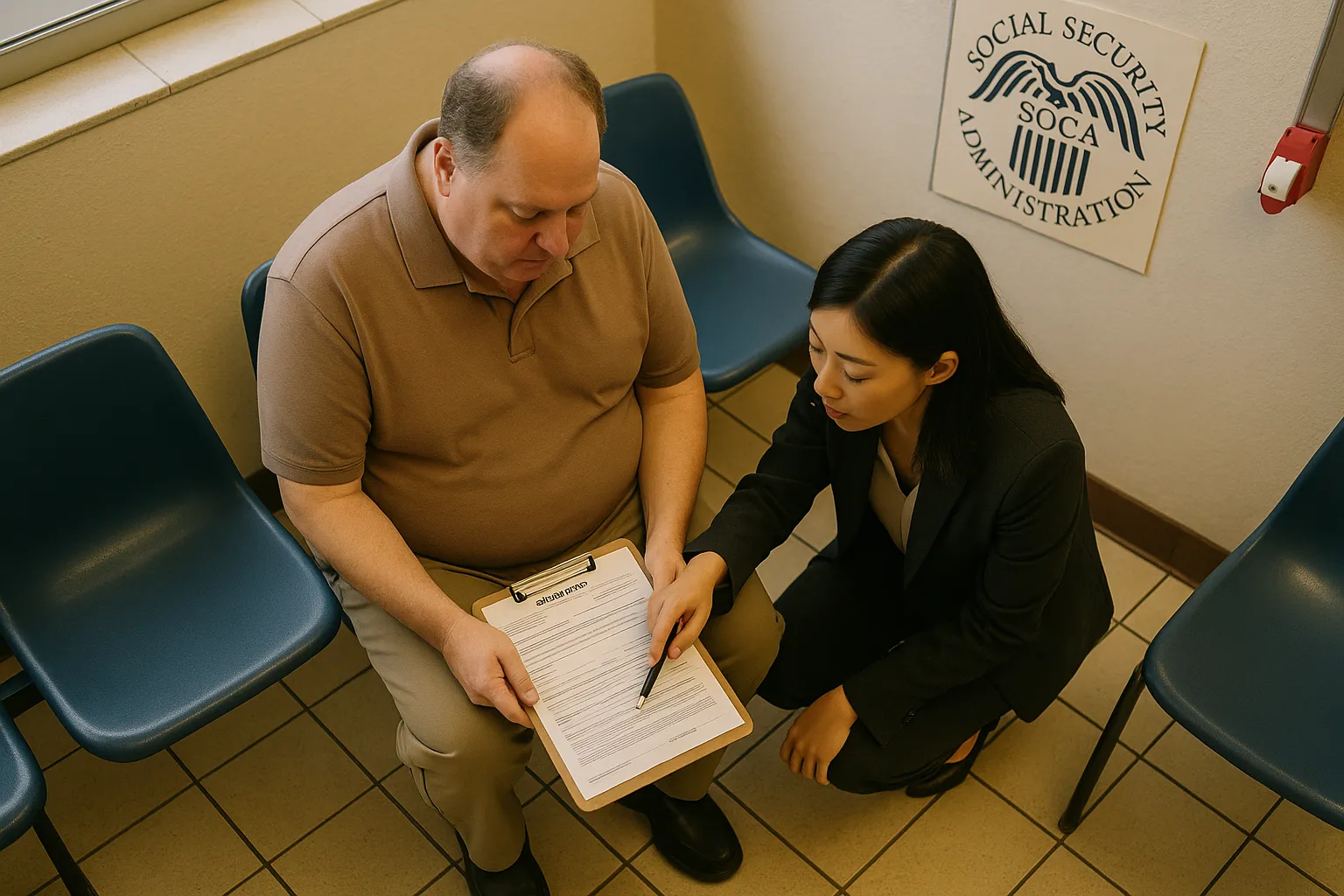
- In person: Schedule an appointment at your local Social Security field office. Florida has offices in every major city, including Miami, Tampa, Jacksonville, and Orlando.
You can confirm program rules and start your online application directly on the official Social Security Administration website, which is the only official source for federal disability benefits information.
Step 4: What Happens After You File
Once submitted, your application is forwarded to Florida Disability Determination Services in Tallahassee. An examiner paired with a medical consultant reviews your records and decides whether your condition meets SSA standards. This review typically takes three to six months.
During this time, you may be asked to:
- Complete a Function Report describing how your condition limits daily activities.
- Submit a Work History Report detailing the physical and mental demands of past jobs.
- Attend a Consultative Examination with an SSA-approved doctor if your medical records are incomplete.
Respond to every SSA request quickly. Missing a deadline or skipping a scheduled exam is a common reason Florida claims get denied.
Step 5: What to Do If Your Claim Is Denied
Do not give up. The majority of initial SSDI claims in Florida are denied, but the appeals process gives you four opportunities to prove your case:
- Reconsideration: A new examiner reviews your file. You must request this within 60 days of your denial letter.
- Hearing with an Administrative Law Judge (ALJ): This is often where strong cases win. The judge can hear testimony from you, medical experts, and vocational experts.
- Appeals Council Review: If the ALJ denies your case, the Appeals Council can review whether the decision followed proper procedure.
- Federal Court: As a last resort, you can file a civil lawsuit in federal district court.
Each level has strict 60-day deadlines, and missing one can force you to restart. Working with a qualified Social Security disability benefits attorney can significantly improve your odds on appeal, especially at the ALJ hearing.
Local SSDI Support Across Florida
Because SSDI rules are federal but hearings are local, knowing resources available in your city matters. Chermol & Fishman, LLC represents clients throughout Florida, including:
- Miami — serving applicants in Miami-Dade, Broward, and the surrounding South Florida region.
- Tampa — covering Hillsborough County and the greater Tampa Bay area.
- Jacksonville — representing claimants throughout Duval County and Northeast Florida.
- Orlando — assisting Central Florida residents with SSDI and SSI claims.
Get Help Applying for SSDI Benefits in Florida
The SSDI application process is complex and unforgiving of mistakes. An experienced legal team can make all the difference. The attorneys at Chermol & Fishman, LLC have decades of combined experience helping Florida residents at every stage, from initial applications to federal court appeals. To schedule a free consultation, visit our Florida disability benefits page today.