
We do not request reimbursement of costs
(such as repayment for obtaining medical records)
from veterans nor from people who suffer from multiple sclerosis.
- Call today for a free evaluation
- 1-888-774-7243
How SSA Determines Whether Accommodations Would Allow Continued Work
Accommodations and Disability Are Not the Same Question
One of the most misunderstood aspects of Social Security Disability law is how workplace accommodations factor into the disability evaluation.
Some applicants worry that if they received accommodations from a previous employer, such as a modified schedule, reduced duties, a special chair, or extra breaks, the SSA will use those accommodations as evidence that they can still work. Others fear that the SSA will deny their claim because hypothetical accommodations may allow them to perform some type of work.
The reality is more nuanced than either of these fears suggests. SSA’s disability standard asks whether you can perform substantial gainful activity in a normal, competitive work environment, not whether you could work under specially arranged conditions.
Understanding this distinction is important when trying to present a strong SSDI claim despite workplace accommodations.
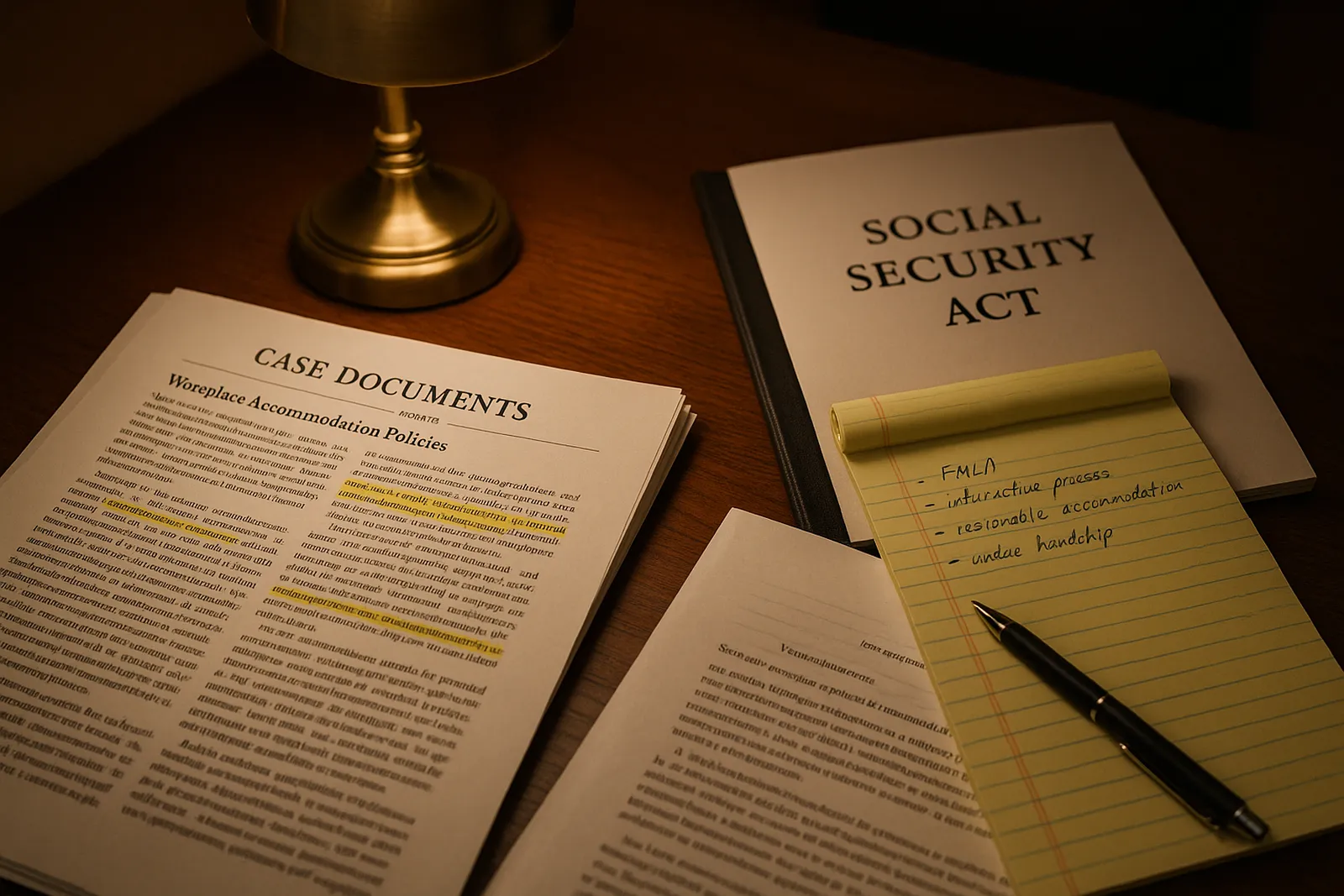
SSA Evaluates Your Ability to Work in Competitive Employment
The Social Security Act defines disability as the inability to engage in substantial gainful activity (SGA) due to a medical impairment such as an illness or injury. Substantial gainful activity involves earning more than a certain amount from work.
When the SSA evaluates whether you can work, it assesses your ability to perform in a regular, competitive workplace where you’re held to the same standards as other employees, work full time, and perform at a level that would satisfy a typical employer.
This means that if you can only work with accommodations that go beyond what a typical employer would provide, or that fundamentally change the nature of the job, the SSA should not count that ability as evidence you can engage in substantial gainful activity.
If you needed a family member to help you complete tasks, if your employer let you take frequent unscheduled breaks, or if your duties were significantly reduced from the job’s normal requirements, those special conditions suggest you weren’t performing competitive work.
The challenge is that the SSA doesn’t always make this distinction clearly. Disability examiners at the initial and reconsideration levels sometimes deny claims based on the fact that the claimant could work with accommodations, without properly analyzing whether those accommodations reflect competitive employment standards.
How Past Accommodations Affect Your Claim
If you received workplace accommodations before you stopped working, this information can sometimes support your claim rather than undermining it.
The fact that you needed accommodations demonstrates that your impairment was already affecting your ability to perform at a competitive level. The more extensive the accommodations, the stronger the argument that you were unable to maintain standard job performance.
Documenting your past accommodations in detail is important to reduce the chances that workplace accommodations will undermine your SSDI claim. You should describe:
- Exactly what modifications your employer made
- Why they were necessary
- Whether they were sufficient to allow you to perform the essential functions of your job
- What happened when the accommodations were no longer available or no longer adequate
Statements from former supervisors or human resources personnel can also help to provide valuable corroborating evidence.
An experienced disability attorney can help frame your accommodation history as evidence of your declining functional capacity by showing a trajectory from full functionality to accommodated work to inability to sustain even accommodated employment.
When SSA Argues You Could Work with Accommodations
If your claim is denied and progresses to an appeals hearing, the question of accommodations sometimes arises when the administrative law judge or vocational expert (VE) discusses whether jobs exist that you could perform.
A judge might ask the VE whether jobs exist that include a sit/stand option, allow for reduced production rates, or provide other accommodations that would address your limitations. Your SSDI attorney should be prepared to challenge this reasoning.
The legal standard requires the SSA to evaluate your ability to perform work as it’s normally performed in the national economy, not with special arrangements. If the only jobs you could do would require accommodations beyond what typical employers provide, that should support a finding of disability.
This is a legal argument that requires an understanding of both the regulatory framework and the vocational evidence. Judges don’t always apply the accommodation standard correctly, and having an attorney who can identify and object to improper reasoning can help you to maximize the chances of approval instead of denial.
How We Address Accommodation Issues in Our Clients’ Cases
At Chermol & Fishman, we review every client’s employment history for accommodation-related evidence.
When a client receives workplace accommodations, we document them thoroughly and present them as evidence of progressive functional decline. When SSA argues our client could work with accommodations, we challenge that reasoning with the applicable legal standards.
We also work with vocational experts to try to establish that the accommodations our clients would need are not typically available in the competitive labor market. This combination of legal argument and vocational evidence may help overcome an accommodation-based denial and can maximize the chances of our clients getting the benefits they deserve.
Ready to Get Help? If you have questions about how workplace accommodations affect your SSDI claim, contact Chermol & Fishman, LLC for a free consultation. Call us at (888) 774-7243 or visit myphiladelphiadisabilitylawyer.com.