
We do not request reimbursement of costs
(such as repayment for obtaining medical records)
from veterans nor from people who suffer from multiple sclerosis.
- Call today for a free evaluation
- 1-888-774-7243
Is Fibrous Dysplasia a Disability? An SSDI Eligibility Guide
Fibrous dysplasia can sometimes be considered a disability under Social Security Administration (SSA) rules when it causes significant bone deformity, chronic pain, fractures, or mobility limitations that prevent you from working full time.
The SSA does not have a listing written specifically for fibrous dysplasia, so most claims are evaluated under the musculoskeletal or endocrine listings, or through a Residual Functional Capacity assessment that looks at what you can and cannot do on the job.
Below, we break down what fibrous dysplasia is, how the SSA reviews claims for disability benefits based on this condition, and the steps you can take to build a stronger case.
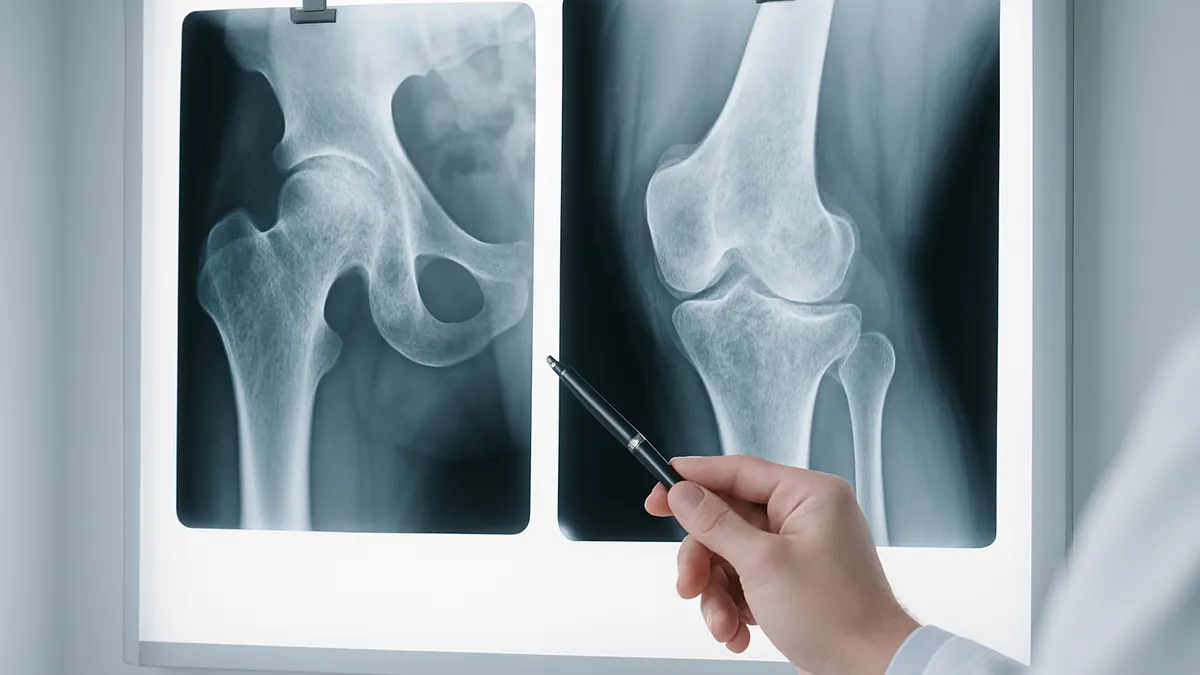
What Is Fibrous Dysplasia?
Fibrous dysplasia is a rare bone disorder in which normal bone tissue is gradually replaced by weaker, fibrous connective tissue.
This process happens because of a genetic mutation that occurs after conception, meaning it is not inherited from a parent. The affected bone becomes softer and more prone to bending, fracturing, or growing into an abnormal shape.
Fibrous dysplasia can affect a single bone or multiple bones throughout the body, and its severity ranges from a mild, symptom-free finding on an X-ray to a debilitating condition that causes repeated fractures and permanent deformity.
Because the disorder affects the skeletal system, many of the functional limitations that it produces overlap with other joint and bone disorders recognized by the Social Security Administration. As a result, disability claims examiners often draw on comparable musculoskeletal listings as there is no listing for the exact diagnosis.
Types of Fibrous Dysplasia
Fibrous dysplasia is generally grouped into the following categories, each with a different level of impact on daily functioning:
- Monostotic fibrous dysplasia: Affects only one bone and is the most common and typically mildest form.
- Polyostotic fibrous dysplasia: Affects two or more bones and carries a higher risk of fractures, pain, and deformity.
- Craniofacial fibrous dysplasia: Affects the bones of the skull and face, which can lead to vision or hearing changes.
- McCune-Albright syndrome: A more severe form that combines polyostotic fibrous dysplasia with hormonal abnormalities and distinctive skin pigmentation.
Symptoms and Complications That May Affect Your Ability to Work
The symptoms of fibrous dysplasia vary widely depending on which bones are affected and how extensively.
Common complications include:
- Bone pain that worsens with activity
- Visible bowing or deformity of the affected limb
- Repeated fractures from minor trauma
- Uneven leg length
- Reduced range of motion in nearby joints.
When the skull or facial bones are involved, some people also experience headaches, vision problems, or hearing loss.
For many applicants, it is the combination of ongoing, chronic pain and physical limitations, rather than any single symptom, that ultimately prevents sustained full-time work.
This is an important distinction, because the SSA is less concerned with your diagnosis on paper and more concerned with how your symptoms limit your ability to stand, walk, lift, or sit through a normal workday.
Does Fibrous Dysplasia Qualify as a Disability Under SSA Rules?
Fibrous dysplasia does not have its own dedicated entry in the SSA’s official Listing of Impairments, sometimes called the Blue Book.
That does not mean the condition cannot qualify for benefits. Instead, claims examiners typically evaluate fibrous dysplasia under the SSA’s official musculoskeletal disorders listing, Section 1.00.
This typically involves comparing your limitations to conditions with similar functional effects, such as arthritis and other joint disorders. If the skeletal involvement is centered in the spine, hips, or neck, examiners may also look to the criteria used for chronic back and neck impairments as a point of comparison.
If McCune-Albright syndrome is involved, the endocrine listings may also come into play, since this form of the disorder can affect hormone-producing glands and lead to related complications such as early puberty or thyroid dysfunction.
A well-documented claim often points to more than one listing category to give the SSA a complete picture of how the disease affects your body.
How the SSA Evaluates Your Fibrous Dysplasia Claim
When a condition does not exactly match a listing, the SSA compares your medical records against the Social Security Blue Book to see whether your impairment is medically equal in severity to a listed condition.
This involves reviewing imaging studies, treatment notes, surgical history, and physical examination findings that document bone fragility, deformity, or reduced function.
If your fibrous dysplasia is not medically equivalent to a listing, the SSA will assess your Residual Functional Capacity (RFC). This is an evaluation of the most you can still do physically and mentally despite your limitations.
The RFC considers:
- How long you can stand or walk
- How much weight you can safely lift
- How often you need to rest
- Whether pain or fatigue interrupts your concentration.
If your RFC shows you can’t do your past work and any other work available in the national economy, you may still be considered disabled even without meeting a specific listing.
Two Paths to Approval: Meeting a Listing vs. a Medical-Vocational Allowance
There are generally two routes to an approved SSDI or SSI claim.
- The first is proving that your condition meets or medically equals a listing. This route is more direct but requires extensive, specific documentation.
- The second option, and the option often chosen by fibrous dysplasia claimants, is a medical-vocational review, where the SSA weighs your RFC against your age, education, and past work experience. Older applicants, or those whose work history is limited to physically demanding jobs, often have an easier time showing that no other suitable work exists given their restrictions.
A smaller group of especially severe diagnoses fall under conditions that automatically qualify for SSDI through the Compassionate Allowances program. Fibrous dysplasia does not qualify for this approach.
Evidence You Need to Support Your Fibrous Dysplasia Claim
Strong medical evidence is very important if you want to maximize your chances of a successful disability claim. For fibrous dysplasia, this typically includes:
- X-rays, CT scans, or MRI results showing the extent and location of the affected bone tissue
- A treatment history from an orthopedic specialist or endocrinologist detailing fractures, surgeries, or bracing
- Documentation of pain management, physical therapy, or mobility aids used
- A functional capacity evaluation or a treating physician’s statement about your specific work-related limitations
- Records of any hormonal complications if McCune-Albright syndrome is present
- A personal statement describing how symptoms affect daily activities and work tasks
Step-by-Step: How to Apply for SSDI or SSI With Fibrous Dysplasia
Applying for benefits is a multi-stage process. Here is a general roadmap:
- Gather your medical records. Request complete files from every provider who has treated your bone condition.
- File your initial application. Submit your claim online, by phone, or in person with the SSA.
- Complete the disability report. Describe your symptoms, treatment, and how they limit your daily functioning.
- Attend any consultative exam. The SSA may schedule an independent medical evaluation if your records need clarification.
- Respond to requests promptly. Delays in providing requested documents can slow down or jeopardize your claim.
- Appeal if denied. Most claims are denied at the initial stage, so a timely appeal is often a normal part of the process.
Because so much of the process depends on how your file is documented and presented, many applicants choose to work with a firm that focuses on Social Security Disability Insurance benefits from the very first application rather than waiting until after a denial.
Getting Help With Your Fibrous Dysplasia Disability Claim
Living with fibrous dysplasia often means managing unpredictable pain, mobility limitations, and the ongoing risk of fracture, all while trying to navigate a complex disability claims process.
Having experienced legal guidance can affect how your case is documented and presented to the SSA. The team at Chermol & Fishman, LLC has spent decades helping clients build strong, well-supported Social Security Disability claims.
Chermol & Fishman, LLC represents disability applicants throughout New Jersey, Pennsylvania, Kentucky, Florida, and Texas, offering the kind of personalized attention that a condition as individualized as fibrous dysplasia requires. If you are unsure whether your diagnosis meets the SSA’s standards, a free case evaluation is often the best first step toward getting the benefits you may be entitled to.
Frequently Asked Questions
Is fibrous dysplasia considered a disability by the SSA?
Fibrous dysplasia can be considered a disability by the SSA if the condition significantly limits your ability to stand, walk, lift, or perform work-related tasks on a sustained basis. Approval for disability benefits is based on the severity of your symptoms and the strength of your medical documentation, not on the diagnosis alone.
Can I get disability benefits for mild fibrous dysplasia?
Mild, monostotic fibrous dysplasia that causes little to no functional limitation is unlikely to qualify you for disability benefits on its own. Benefits are generally reserved for cases involving significant pain, deformity, repeated fractures, or mobility restrictions.
Does fibrous dysplasia qualify for SSDI or SSI?
Fibrous dysplasia may qualify for either SSI or SSDI. SSDI is based on your work history and Social Security tax contributions, while SSI is based on financial need. Some applicants qualify for both simultaneously.
How long does it take to get approved for fibrous dysplasia disability benefits?
Initial decisions on Social Security disability benefits claims often take three to six months, and cases that require an appeal can take considerably longer. Thorough, well-organized medical evidence submitted early can help reduce the chances of unnecessary delays.
What if my fibrous dysplasia claim is denied?
A denial at the initial stage of applying for disability benefits is common and does not mean your case lacks merit. You generally have 60 days to request reconsideration or a hearing before an administrative law judge.